Plagiarism in research is considered a form of cheating and highly unethical as it undermines academic integrity. Plagiarism in research continues to be one of the main reasons for manuscript rejection, which makes it critical for academics to understand the most common types of plagiarism and how to avoid this in their academic writing. In simple terms, plagiarism can be defined as the act of taking someone else’s work and presenting it as one’s own without properly crediting the original source. In this article, we’ll delve into the different types of plagiarism and offer practical tips to steer clear of this ethical sinkhole.
Research is built on the existing knowledge in the field. Considering the common phrasing and terms used to describe academic methods and contexts, there is a high chance of some level of similarity being present in your work. This is especially true for those who are new to academic writing or those who have English as a second language and who may rely on past publications to guide how they present their original ideas and concepts. This risk of similarity may be mitigated by understanding the types of plagiarism in research writing.
The most blatant form of plagiarism involves copying someone else’s work word-for-word without giving them credit. This type of plagiarism is a direct violation of academic integrity and fairly easy to detect using plagiarism checkers. An example would be lifting entire paragraphs and inserting them into one’s own work without quotation marks or proper citations, which is considered a form of cheating and plagiarism in academia.
Also known as text-recycling or redundant publication, self-plagiarism occurs when a researcher submits their own previously published work or parts of it to another publication without properly acknowledging previous works. Researchers are expected to adhere to ethical standards by transparently disclosing any reuse of their prior work to avoid misrepresentation. While there may be cases where self-referencing or repurposing one’s own work is legitimate, it’s a problem if the author tries to pass this off as new, original content. For example, submitting a manuscript to different journals without disclosing a major overlap in content with a paper they’d previously published is self-plagiarism.
While paraphrasing is an essential writing skill, researchers need to be careful not to misuse it. Patchwork plagiarism occurs when you rephrase someone else’s ideas or content without properly attributing the original source. While the language may be different, the underlying concepts and structure remain the same and failure to credit the original source is unethical. One such example is paraphrasing passages from a textbook and presenting it as their own, instead of quoting or summarizing the text with the right citation.
This occurs when you blend phrases, ideas, or data from different sources together to create a new piece of work without properly citing the original sources. While not copying any one source directly, such patchwriting is considered a type of plagiarism if the previous works are not acknowledged. One example of mosaic plagiarism would be writing a literature review for a research paper and borrowing sentences or rephrasing ideas from various sources without citing them.
This type of plagiarism occurs when a researcher inadvertently neglects to credit the original source. This may be sheer forgetfulness, misunderstanding of citation guidelines, or an unintended duplication of another’s work. For example, forgetting to cite a paper you had read earlier and referenced in your research paper. While unintentional, it is still flagged as cheating and plagiarism by journals and institutions looking to uphold academic integrity.
Plagiarism is a significant issue in academia, but with the right strategies in place, it can be avoided. Here are some proven strategies to help you avoid plagiarism when using generative AI tools.
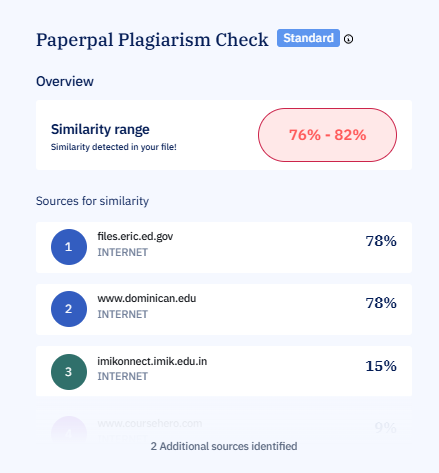
Paperpal, an AI academic writing assistant, focuses on providing comprehensive support at every step of the writing process, including a trusted plagiarism check that allows authors to check their work for similarity. It scans your writing against billions of online sources. It provides a detailed plagiarism report with a similarity score and side-by-side comparisons allowing you to quickly assess and address any issues before submission. If you haven’t tried this online plagiarism prevention check yet, don’t miss out. Get started with Paperpal’s plagiarism checker for free and avoid accidental plagiarism!
Paperpal is a comprehensive AI writing toolkit that helps students and researchers achieve 2x the writing in half the time. It leverages 22+ years of STM experience and insights from millions of research articles to provide in-depth academic writing, language editing, and submission readiness support to help you write better, faster.
Get accurate academic translations, rewriting support, grammar checks, vocabulary suggestions, and generative AI assistance that delivers human precision at machine speed. Try for free or upgrade to Paperpal Prime starting at US$25 a month to access premium features, including consistency, plagiarism, and 30+ submission readiness checks to help you succeed.
Experience the future of academic writing – Sign up to Paperpal and start writing for free!
The overwhelming volume of information that scholars must process daily has made the best AI summarizer tools more indispensable than…
A strong thesis statement can make all the difference in an academic essay. It tells your…
Every student knows the feeling: you've spent hours writing an essay, you think it's good, and then a nagging thought creeps…
Reading research papers takes time. Making sense of 20 of them at once takes something else entirely.…
March’s academic developments point to a system that is becoming far more structured, screened, and accountability-driven.…
You use AI to refine a paragraph in your research paper, and suddenly you’re wondering: Is this still my work?…