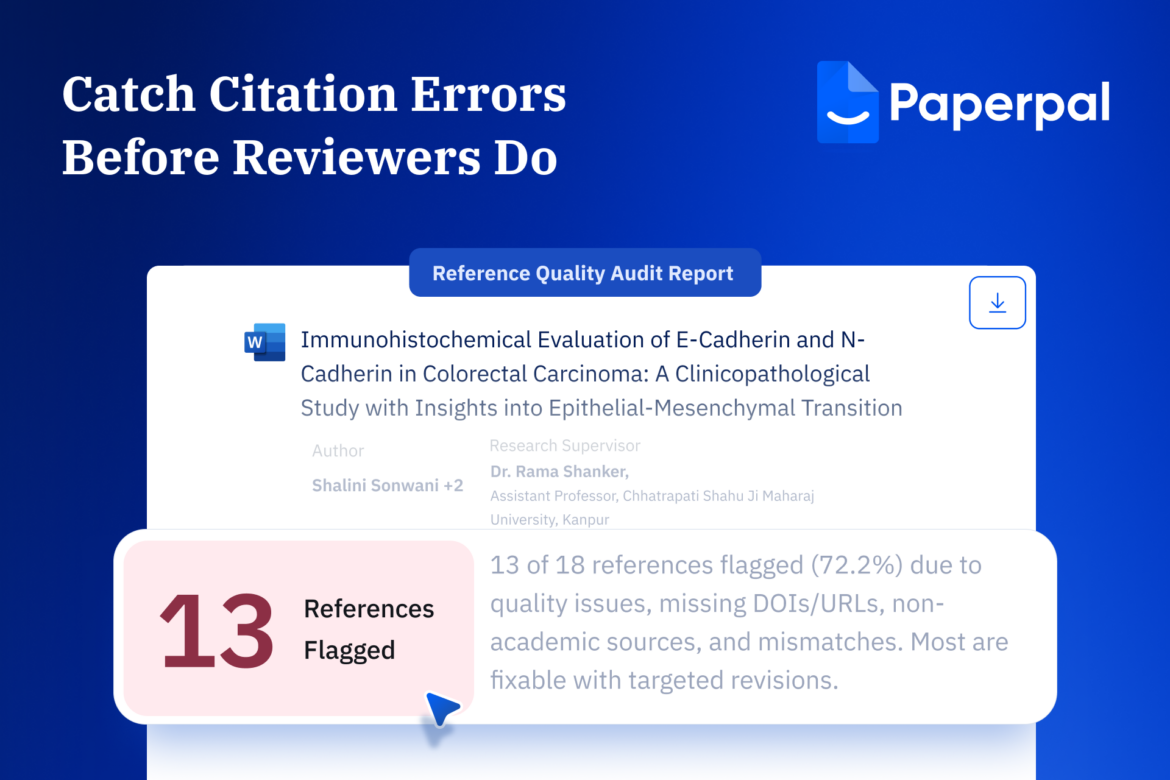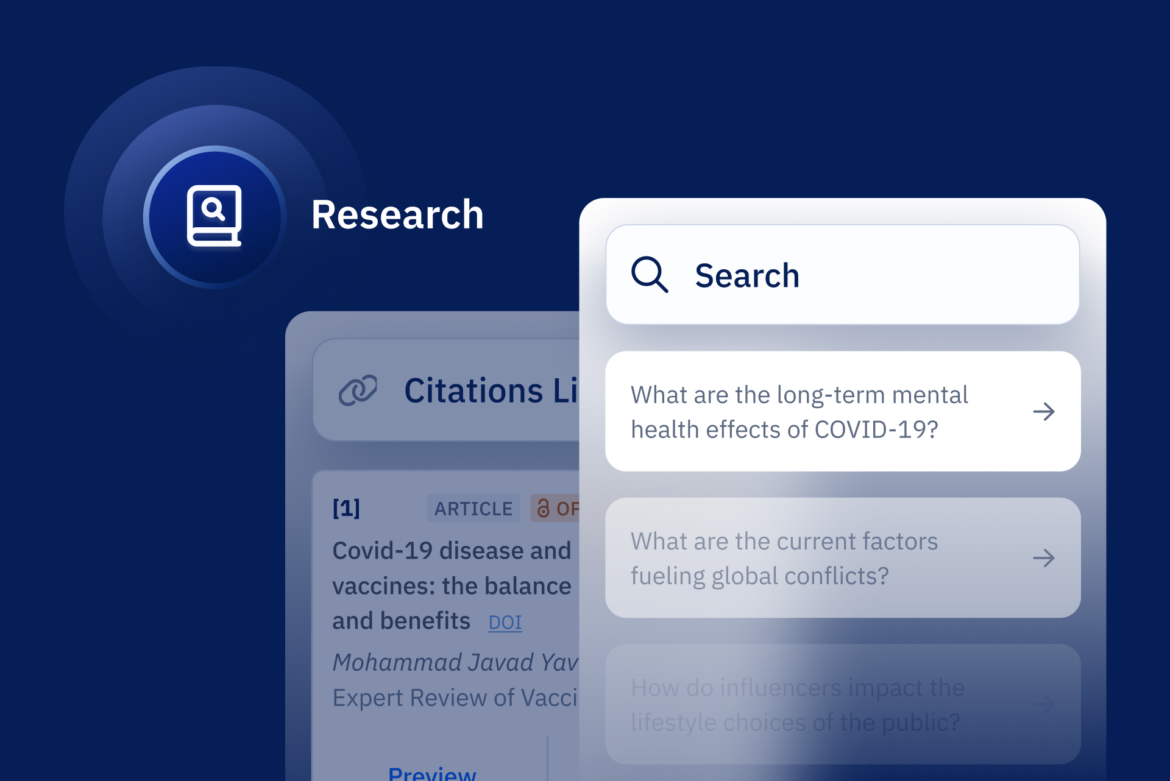

If you’ve submitted a manuscript in the last year or two, you’ve probably noticed reviewers asking sharper questions about your reference list than they used to. That’s not a coincidence. With AI writing tools becoming part of nearly every researcher’s workflow, the reference list, once the most mechanical part of …
academic writing
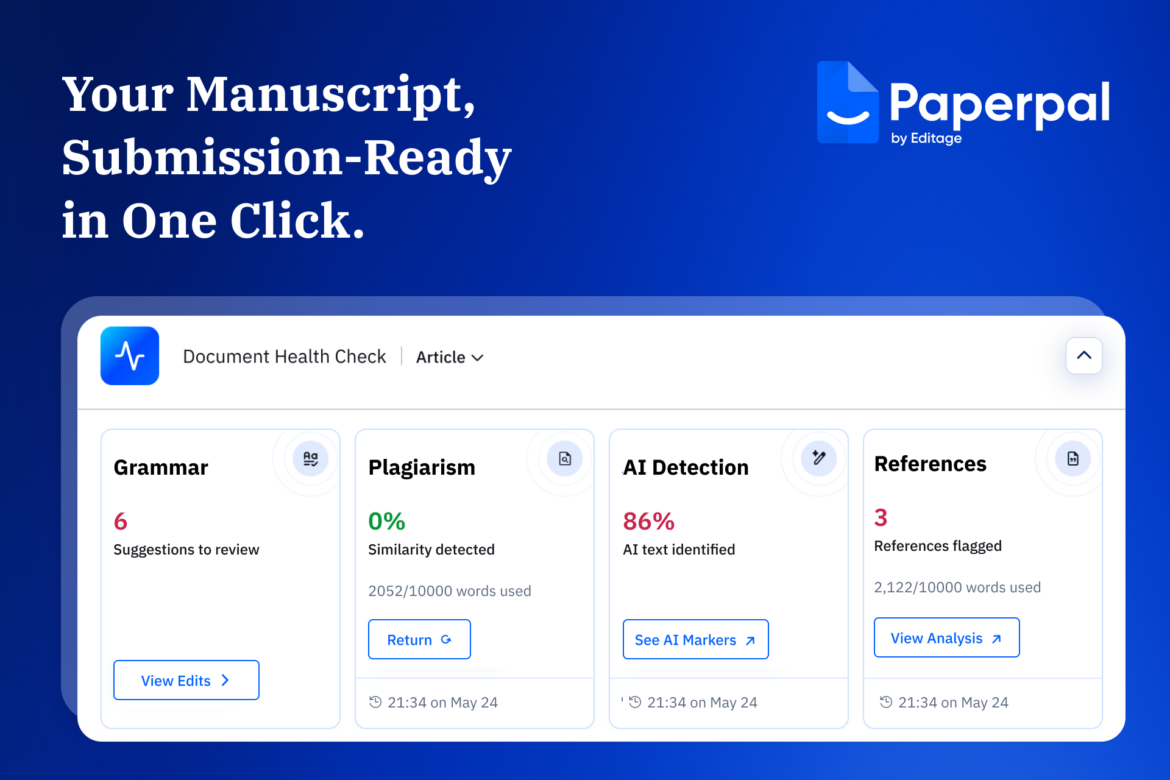
Most researchers treat peer review as the first real test of their manuscript. It isn’t. Before a single reviewer reads your work, your manuscript passes through a series of filters: editorial screening, similarity checks, compliance review, reference verification. Any one of these can return a manuscript to your inbox, sometimes …
You’re finally ready to submit the manuscript you’ve spent months or years on. Yet, as the final submission deadline creeps closer, a familiar wave of anxiety sets in. “Was my phrasing academic enough for a top-tier journal?”; “Did I miss a citation and risk a plagiarism flag?”; “Will the editor …
Even before readers and reviewers reach your abstract, they often form an impression of your research paper based on its title. And yet, most researchers and students spend surprisingly little time crafting this critical part of their research paper. After months of study, data collection, analysis, and writing, the research …
A literature review is a critical analysis and synthesis of existing research on a particular topic. It provides an overview of the current state of knowledge, identifies gaps, and highlights key findings in the literature.[1] The purpose of a literature review is to situate your own research within the context of …
You might find this Grammarly review unique. Unlike reviews aimed at users who write blogs or marketing copy, this one is for those engaged in academic writing. If you’re regularly working on theses, essays, research papers, or literature reviews, this article introduces a more academic-focused Grammarly alternative you’ll want to …
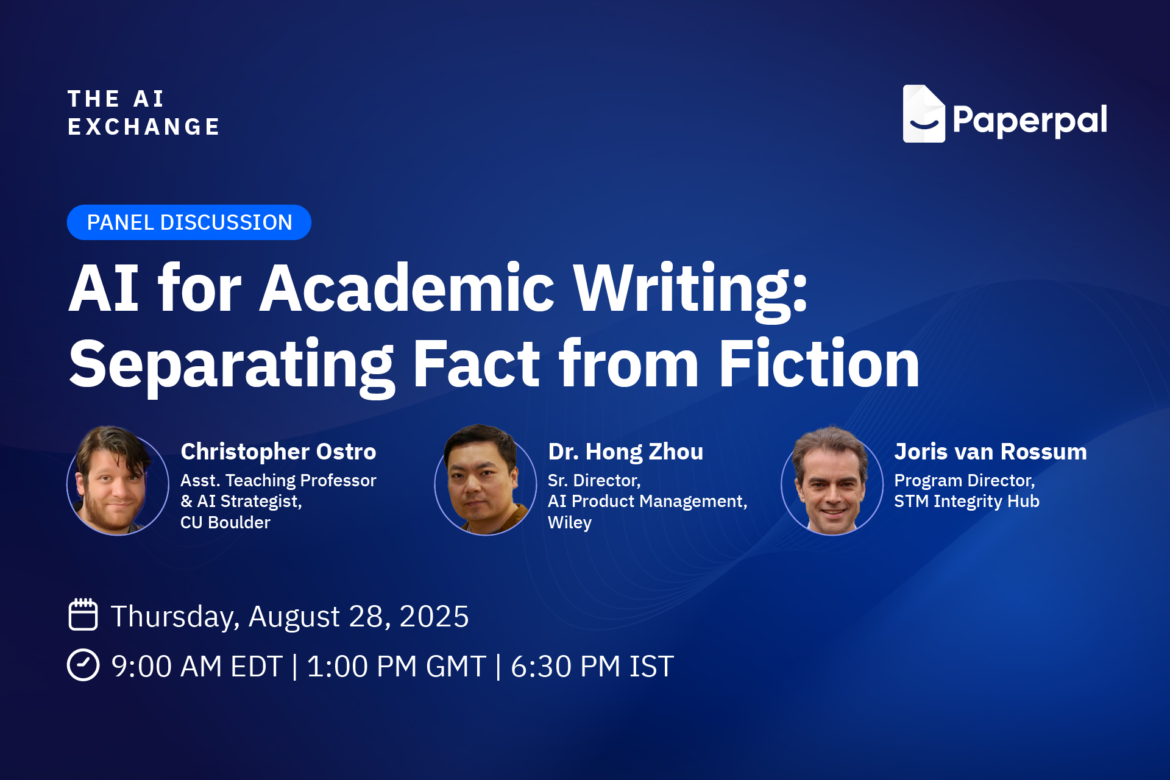
Generative AI tools are transforming how researchers and students write, yet many still face uncertainty about what’s ethical, what’s allowed, and how to avoid unintentional mistakes. Paperpal’s recent survey of 1,400+ academics revealed that while over 80% use AI tools for their research and writing, 44% of the respondents were …
Did you know that the concept of peer review as a method of evaluating written work goes as far back as the 5th century in ancient Greece? Scholars would sit around, discussing and critiquing each other’s work. From this unstructured, informal practice, editorial pre-publication peer review was pioneered by the …
Writing a synthesis essay is often considered challenging, as it requires not only the ability to read and synthesize various sources, viewpoints, and data into a cohesive narrative but also an understanding of the complexities of scholarly writing and academic communication. However, scholars must not confuse it with other forms …
Generative AI has ushered in a new era of possibilities, redefining the way we create content, analyze data, and unlock new insights. However, as academics delve into the efficiencies that these generative AI tools offer, it’s crucial to recognize their limitations and be aware of the ethical considerations around using …