

Table of Contents
A literature review1 is an important section in a document and consists of an overview or discussion of the existing research in the field. This section is important because it helps readers understand the context and background of research conducted by authors and the previous works referred to in the research process.
This section is usually quite detailed and describes related prior research and some important findings. However, writing this section is quite time consuming because authors would need to find relevant papers on similar subjects. Several AI tools for literature review are now available to help researchers streamline every stage of the research process and complete this section quickly and efficiently.
This article discusses the features and functionalities of few best AI tools for literature review and suggests a possibly best one that you could use to serve your writing and research objectives.
What is a Literature Review?
A literature review comprises information about published articles about a specific subject. A literature review can be a standalone document or a section in a document such as a research article. It usually discusses the findings of already published works relevant to the subject under study. This review of prior literature helps readers understand the background of the subject and identify gaps in existing literature that the present study aims to address. Literature reviews, thus aim to prove why research on a specific subject is necessary. These documents also help researchers keep track of their progress.
How can AI tools solve the challenges of writing a literature review?
Writing a literature review poses a few challenges.2
1. Information overload
Search engines generate a large volume of information, much of it generic or irrelevant to your research question. To avoid filtering through irrelevant results, you can use AI literature search tools like Paperpal, Elicit, and Consensus to find relevant papers based on conceptual similarity, rather than just keyword matching.
2. Quality of Sources
To ensure the sources are credible and authentic, you would need to verify the author’s credentials, publication details, and other such identifying information. But with Scite, you can go futher to check whether a study has supported or contradicted specific findings, so you can confidently rely on the sources.
3. Organizing the information
Once you have collected the information, you would need to organize it in a coherent way to clearly communicate the necessity of your research to your readers. The literature review could be organized chronologically starting with the earliest published work, or based on the theme or topic, gradually leading up to identify the gaps. However, this can be a time-consuming process. In this phase, Research Rabbit helps you create visual network graphs showing relationships between papers, authors, and concepts, revealing connections you might miss manually. Paperpal’s ChatPDF feature lets you extract and compare methodologies across multiple papers simultaneously, making synthesis far more efficient.
4. Avoiding bias
While searching for related published literature, it is essential to try and avoid bias and prevent your personal opinions from influencing your review. By accessing 250M+ papers across disciplines (as with Paperpal and R Discovery), AI literature search tools ensure you’re exposed to a broader range of perspectives and findings. They can identify contradictory evidence or alternative viewpoints, helping you maintain objectivity and produce more balanced reviews.
5. Ensuring relevance of information
Search engines may yield information that could be really old. In such cases, it is essential to ensure that your literature review includes current information. Also, if any information is updated then your review should be updated to reflect this. Most AI tools offer alerts for newly published research and can filter results by publication date. This ensures your review includes the most current findings while maintaining access to foundational works when appropriate.
You Might Like Reading: What is a Literature Review? How to Write It (with Examples)
What Are the Types of AI Literature Review Tools?
AI literature review tools can belong to various categories that perform different functions. Different AI tools for literature review can provide support during every stage of the research process. Here are the main stages of writing a literature review, along with examples of a few supporting AI tools:3
Stage 1: Finding and collecting research papers
Some AI tools for literature review are excellent in finding research papers relevant to your specific area of research. These tools help in identifying different connections between authors and create a vast pool of literature for your perusal. Examples include Paperpal, R Discovery, Research Rabbit, and Semantic Scholar.
Stage 2: Organizing and managing sources
Once you have collected relevant articles, you would need to organize and manage them so that you can find and use them quickly when required. Some tools include Paperpal, Zotero, EndNote, and Research Rabbit.
Stage 3: Reading and summarizing papers
An important stage in the literature review process is to read all the papers you’ve collected and summarize them for your research. This can be a very time-consuming task and therefore using the right AI tool can help increase your efficiency. Some tools include Paperpal, Elicit, Scholarcy, and Anara.
Stage 4: Analyzing gaps and patterns in literature
The right AI tool can help you identify patterns in the literature and help find gaps that you can address in your research. Common tools include Consensus, Research Rabbit.
Stage 5: Writing the literature review section
This process is very important and time-consuming but can be easily accomplished using the right AI tool that can help you write your article following the required journal or other guidelines. Common tools that support this function include Paperpal and Writefull.
6 AI Tools for Conducting Literature Reviews
The following AI tools for literature review help streamline your research writing process.
1. Paperpal
Paperpal is a comprehensive AI writing toolkit intended to provide overall support to users throughout their research writing process. Paperpal has a few unique features that can support you in different ways.
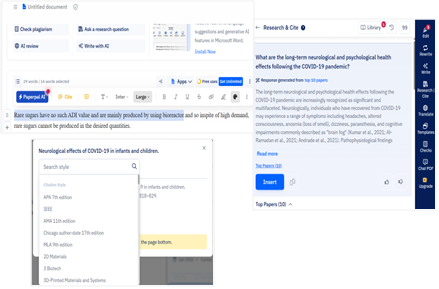
Figure 1: Paperpal’s interface showing all features4
- Paperpal’s Research Feature: Provides science-backed answers to your questions instantly and lets you save references to your in-built citation library. Paperpal generates responses from 250M+ research articles and helps you efficiently continue your writing process without any disruption in your writing momentum. It can also help you explore new ideas with verified information that you could incorporate into your work as you write. Figure 1 shows an example of the user interface of Paperpal’s Research and Cite feature.
- Paperpal’s citation generator:5 This feature is integrated into Paperpal’s writing workflow and can help you find and cite sources in 10,000+ styles, such as APA, AMA, MLA, Chicago, to name a few. Once you add a reference to your citation library, to cite it in your paper, simply select it and choose the appropriate style and the generator will generate the citation correctly (Figure 1).
- ChatPDF:6 This feature allows you to upload up to 10 PDFs to extract insights or compare methodologies collectively. You can also ask questions in any language and get accurate answers marked with citations. This feature can help by creating insightful summaries of the pdf and help save your time and effort.
2. R Discovery
This tool provides personalized reading recommendations based on user interests from research articles sourced from sites such as PubMed, PubMed Central, CrossRef, etc. R Discovery mainly helps organize your references by providing curated reading feeds and also provides the option of translating and reading articles or listening to your research in your own language.
R Discovery has the following features:7
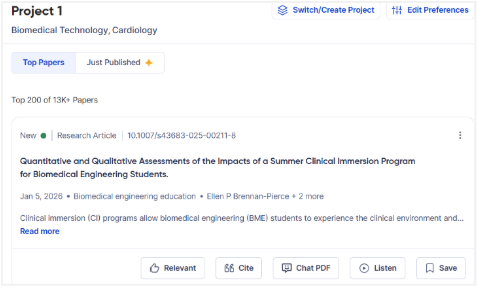
Figure 2: R Discovery’s interface
- Comprehensive research repository: 250M+ research articles, including peer-reviewed papers, open access papers, and preprints across 9.5M+ topics and 32,000 journals that can be freely accessed
- Literature recommender: The platform offers free personalized AI recommendations based on user interests and reading preferences (Figure 2).
- Generative AI-powered research assistant: Ask R Discovery extracts insights and provides links to sources and offers the option to save the search and generate and download citations.
- Summarization, translation, and audio streaming: The tool generates summaries of papers, translates papers in 30+ languages, and can help users listen to research papers and create audio playlists.
3. Consensus AI
Consensus AI is an AI-powered academic search engine that helps search and analyze more than 200 million peer-reviewed research papers. This tool scans millions of papers to find those related to your research objective (Figure 3). When you start a new AI literature search using a research query, Consensus will generate results with the following information:8
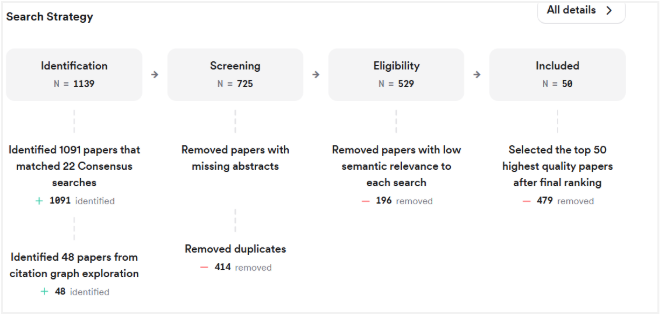
Figure 3: Sample search strategy by Consensus AI to find relevant papers8
- A consensus meter (Figure 4), showing the percentage of papers that answer your question as a yes, no, etc
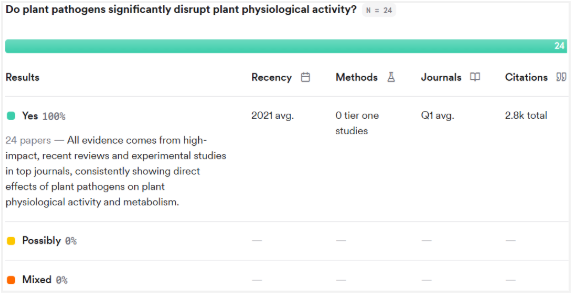
Figure 4: Consensus meter for a sample search8
- A summary with citations
- Key findings and corresponding citations
- A research gaps matrix based on research coverage
- A list of open research questions
- Full list of references
4. Scite AI
This platform helps researchers discover scientific literature through a feature called Smart Citations. This platform has indexed 1.4B+ citations, partners with 30+ publishers, and serves 2 million users worldwide. Scite.ai has the world’s largest database of Citation Statements, which are snippets from full-text articles where authors use references in-text. Their research repository includes 187M+ research papers that are linked to each other through citations.
Scite has the following key features:9
- Smart Citations: Allow users to see how a publication has been cited in different articles by providing the context of the citation and identifying whether the citation provides supporting or contrasting evidence for the cited claim in the current research.
- Citation context: Shows users how specific sections of an article are cited in research papers.
- Citation reports: Scite.ai provides reports and visualizations that depict citation patterns. This helps researchers identify influential articles and authors.
- Visualization tools and dashboards: Users can track and visualize citation trends, create dashboards, and set alerts.
However, Scite.ai focuses on scientific articles and may not be useful for other documents such as books and other non-academic sources.
5. Elicit
Elicit helps users search over 138 million academic papers and 545,000 clinical trials. Here are some important features of this tool:10
- Uses semantic search to find papers even without the right keywords.
- After gathering relevant sources, you can use screening criteria to select the most appropriate papers.
- Elicit can analyze up to 1000 papers simultaneously.
- Elicit cites every AI-generated claim with sentence-level citations from the searched papers.
- Elicit helps specify broad research questions, uses custom embedding models to rank papers by similarity in content or meaning, and then takes the top 1000 papers and uses large language models to further prioritize based on relevance to the research question.
6. Research Rabbit
Research Rabbit has access to over 270 million academic papers. The platform’s algorithm adapts to users’ reading patterns and research interests and accordingly generates more relevant recommendations with every AI literature search. Research Rabbit offers two options for getting started with your research:11
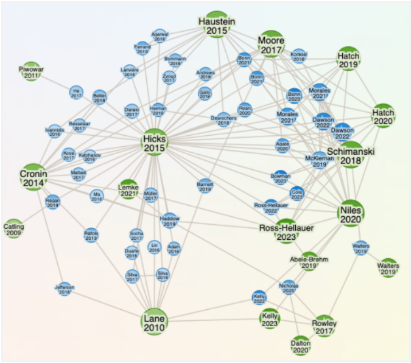
Figure 5: Sample network graph of interconnections between literature11
- If you have a starting point, you can search for articles to add to a collection.
- If you already have a collection using reference managers like Zotero, you can import your collection into Research Rabbit.
- Once your collection is imported, Research Rabbit analyzes the citations within each article and generates a network graph encompassing all literature related to your chosen topic (Figure 5).
As shown in this network graph, the connections between unrelated articles reveal various interdisciplinary intersections.
Literature Review Tools: Key Features Compared
| Characteristics | Paperpal | R Discovery | Consensus AI | Scite AI | Elicit | Research Rabbit |
| Key features | Research & Cite (find articles and add citations), Chat with PDF (extract insights from PDFs) | Literature recommender, summarization, translation, audio streaming | Consensus meter, summary with citations, key findings, research gaps matrix | Smart citations, citation context and reports, visualization & dashboards | Semantic literature search, extract structured data into comparison tables, export references to bibliographic tools | Citation-based search, author network visualization, keyword search, export citations to reference managers |
| Assistant feature | Yes | Yes, Ask R Discovery | Yes, Consensus GPT | Yes, a chat experience like ChatGPT but with real, up-to-date references | No | No |
| Research repository | 250M+ research articles | 250M+ research articles | 200M+ peer-reviewed research papers | 187M+ research papers | 138M+ academic papers | 270M+ academic papers |
| Browser extension | Yes. MS Word, Google Docs, Chrome, Web, Overleaf | Yes. On the Web, as a mobile app (iOS and Android), Chrome extension, & ChatGPT plug-in | No | Yes | No | No |
| Pricing & packages | Free: Unlimited citation generation, limited Chat with PDF, 5 uses/day of research Q&A, among other features Prime: Unlimited use of research Q&A, citation generation, and ChatPDF12 | Free: Access to 250 million papers R Discovery Prime: Unlimited access to advanced features. ($12/month) Prime bundle: R Discovery prime + additional benefits of academic writing ($25/month)13 | Basic quick search & abstract summaries: Free Pro: Unlimited professional search using full texts in analysis: $10/month Deep: For researchers conducting frequent literature reviews: $45/month14 | Personal: Full-text search, contextual citation reports ($144/year) Organization: Expanded assistant capabilities, user analytics, API access, etc. (custom pricing)15 | Basic: For casual exploration (Free) Plus: For deeper research ($10/user/month) Pro: For systematic reviews ($42/user/month) Team: For collaboration ($65/user/month) Enterprise: For companies & schools (custom)16 | Free: Search from up to 50 inputs, one project, basic search settings RR+: Search from 300 inputs, advanced search settings, multiple projects ($120/year) Institution: Integrate with your research library, review usage statistics (customized)17 |
How to Choose the Best Literature Review Tool for Your Research?
Here are a few points to consider to choose the best AI tools for literature review for your research:
1. Understand what your objective is because there are AI tools with different capabilities and you should ensure that you use the correct tool to serve your purpose. For instance, are you looking for summarization, article search, organization, or writing support? Some tools, such as Paperpal, cover all functions, while others are appropriate for specific functions only.
2. Check if the AI literature review tool is integrated with citation management tools to organize the references. Several tools may be integrated with tools such as Zotero, EndNote, Mendeley, etc. This integration can help by automatically formatting citations in the required format.
3. Check coverage of the AI literature review tool. All AI tools for literature review have access to millions of published research articles across various disciplines. To ensure that you get a good mix of results, check the number of articles the tool has access to and the number of disciplines it covers in its search.
4. Apart from the main features, check for any additional features that could add value to your research process.
5. Check the pricing and packages. Most AI literature review tools offer basic features for free and other packages with access to additional features, at a monthly or annual cost. Choose the package that best serves your budget and objectives.
Thus, the AI industry has several AI literature review tools that have different functionalities and can support your research process in many ways. While some tools are good at only one or two key features, Paperpal supports your research in a more holistic way, from literature search to the final writing of your research paper. Paperpal has access to over 250M+ articles and 9.5M+ topics across all disciplines and with its various features such as Research and Cite, Chat PDF, and Write, you can rest assured that your research process will be supported completely.
Frequently Asked Questions
AI tools for literature review can help in making your work more efficient and organized. Here are a few reasons why you should use such tools:3
– Increased efficiency: AI tools can get your work done in minutes. The search for relevant research articles can be time consuming, but AI tools can accomplish this within minutes.
– Broader coverage: AI tools go beyond simple keyword search to find articles. With your usual keyword search, there is a restricted number of the results you can get. However, AI tools can identify connections between authors and articles, which you wouldn’t have been able to identify.
– Better organization: Your selected pool of articles can be well organized from the start leading to better efficiency when you eventually start writing your article.
– Better writing: AI tools help you refine your writing, provide real-time suggestions, and help ensure that your writing follows journal guidelines. This leads to an increased journal acceptance rate.
Yes, some AI tools for literature review can help with identifying research gaps. Tools such as Consensus AI provide a list of research gaps based on your search, which could help in your current or future research as well. AI tools are able to quickly identify patterns, contradictions, and unanswered questions during the literature search. Consequently, they can provide a list of topics or questions that haven’t been covered much.
AI tools such as Zotero help store, tag, and annotate your sources. The AI tags can also help automatically categorize your articles and suggest related reading material.
Some of the best free AI tools for literature review include Paperpal, R Discovery, Consensus AI, Elicit, and Research Rabbit. Most free versions are available with a few restrictions, such as the number of articles that are used to generate results, app features, plugins, etc. Paperpal is an all-in-one comprehensive toolkit because it helps in your research writing process from literature finding to writing the paper.
We hope this article has provided you with an in-depth understanding of AI tools that can be used for literature review and help you in your research journey.
Paperpal is a comprehensive AI writing toolkit that helps students and researchers achieve 2x the writing in half the time. It leverages 23+ years of STM experience and insights from millions of research articles to provide in-depth academic writing, language editing, and submission readiness support to help you write better, faster.
Get accurate academic translations, rewriting support, grammar checks, vocabulary suggestions, and generative AI assistance that delivers human precision at machine speed. Try for free or upgrade to Paperpal Prime starting at US$25 a month to access premium features, including consistency, plagiarism, and 30+ submission readiness checks to help you succeed.
Experience the future of academic writing – Sign up to Paperpal and start writing for free!
References
1. Writing a literature review. Purdue University. Accessed January 16, 2026. https://owl.purdue.edu/owl/research_and_citation/conducting_research/writing_a_literature_review.html
2. Challenges when writing a literature review. London South Bank University. Accessed January 17, 2026. https://library.lsbu.ac.uk/c.php?g=716489&p=5230929
3. Best AI tools for literature review in 2025. Research Rabbit. Published October 7, 2025. Accessed January 18, 2026. https://www.researchrabbit.ai/articles/best-ai-tools-for-literature-review
4. Paperpal interface. https://edit.paperpal.com/
5. Cite sources accurately in 10,000+ styles with Paperpal’s new citation generator. Paperpal blog. Published August 6, 2024. Accessed January 19, 2026. https://paperpal.com/blog/news-updates/product-updates/cite-sources-accurately-in-10000-styles-with-paperpals-new-citation-generator
6. Paperpal launches Chat PDF: Ask PDF anything and get summarized research insights in minutes. Paperpal blog. Published December 23, 2024. Accessed January 21, 2026. https://paperpal.com/blog/news-updates/product-updates/paperpal-launches-chat-pdf
7. R Discovery vs Scite: Features, benefits, and pricing. R Discovery blog. Published January 9, 2025. Accessed January 22, 2026. https://discovery.researcher.life/resources/rdiscovery-vs-scite-what-is-the-difference
8. Consensus user interface. https://consensus.app/search/plant-pathogens-disrupt-photosynthesis/mZGoUwT2TPetAeMEOkvk9A/
9. Scite.ai smart citations. Albert Einstein College of Medicine. Accessed January 23, 2026. https://library.einsteinmed.edu/scite
10. Elicit website. Accessed January 24, 2026. https://elicit.com/solutions/search
11. Research Rabbit: An AI research tool. Coates Library Trinity University. Accessed January 24, 2026. https://lib.trinity.edu/2024/03/researchrabbit/
12. Paperpal pricing. Accessed January 25, 2026. https://paperpal.com/pricing
13. R Discovery pricing. Accessed January 26, 2026. https://discovery.researcher.life/prime?utm_source=r-discovery&utm_medium=web&utm_campaign=subscription&secondary_source=web
14. Consensus pricing. Accessed January 25, 2026. https://consensus.app/pricing/
15. Scite pricing. Accessed January 26, 2026. https://scite.ai/pricing
16. Elicit pricing. Accessed January 26, 2026. https://elicit.com/pricing
17. Research Rabbit pricing. Accessed January 26, 2026. https://www.researchrabbit.ai/pricing
 Paperpal for China
 Paperpal for Korea
 Paperpal for Japan


 Speak to us