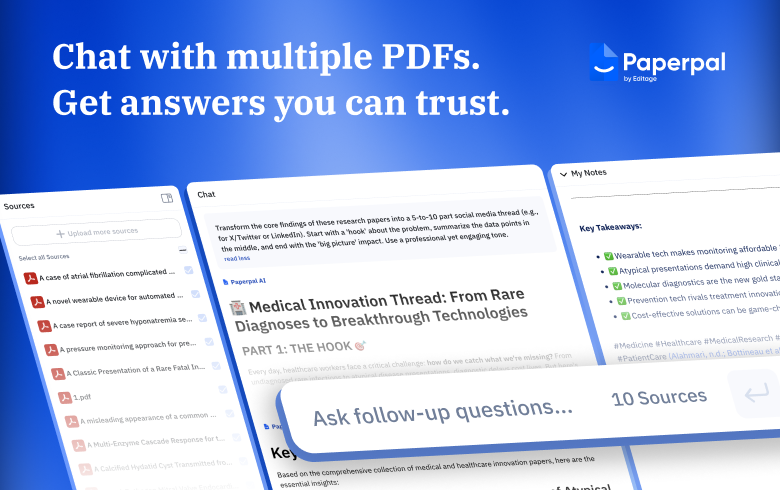


Reading research papers takes time. Making sense of 20 of them at once takes something else entirely. Pulling themes from a stack of research papers, tracking how the methods vary across studies, figuring out what’s actually been answered and what hasn’t — that’s where most research hours quietly disappear. Paperpal’s Chat PDF changes that equation. Instead of spending hours reading passively, you can ask your documents questions, or compare multiple papers at …
Elizabeth Oommen George
Elizabeth Oommen George is Associate Director – Content at Paperpal and Editor-in-Chief of the Paperpal Blog, where she leads AI-first editorial initiatives that support researchers across the academic writing and publishing journey. A seasoned content strategist and editor, she creates high-impact, educational content on manuscript writing, journal submissions, and the evolving role of AI in scholarly communication. Elizabeth is a strong advocate for purpose-built AI that enhances—not replaces—researchers’ voices. Her work focuses on making academic publishing more accessible, particularly for early-career researchers and those writing in English as a second language. Before joining Paperpal, she contributed to leading publications including Bloomberg India, The Sunday Guardian, and The South China Morning Post. She holds degrees in history, advertising, and marketing, and brings a multidisciplinary perspective to content and communication. Outside work, she enjoys photography, art, and planning her next travel adventure.
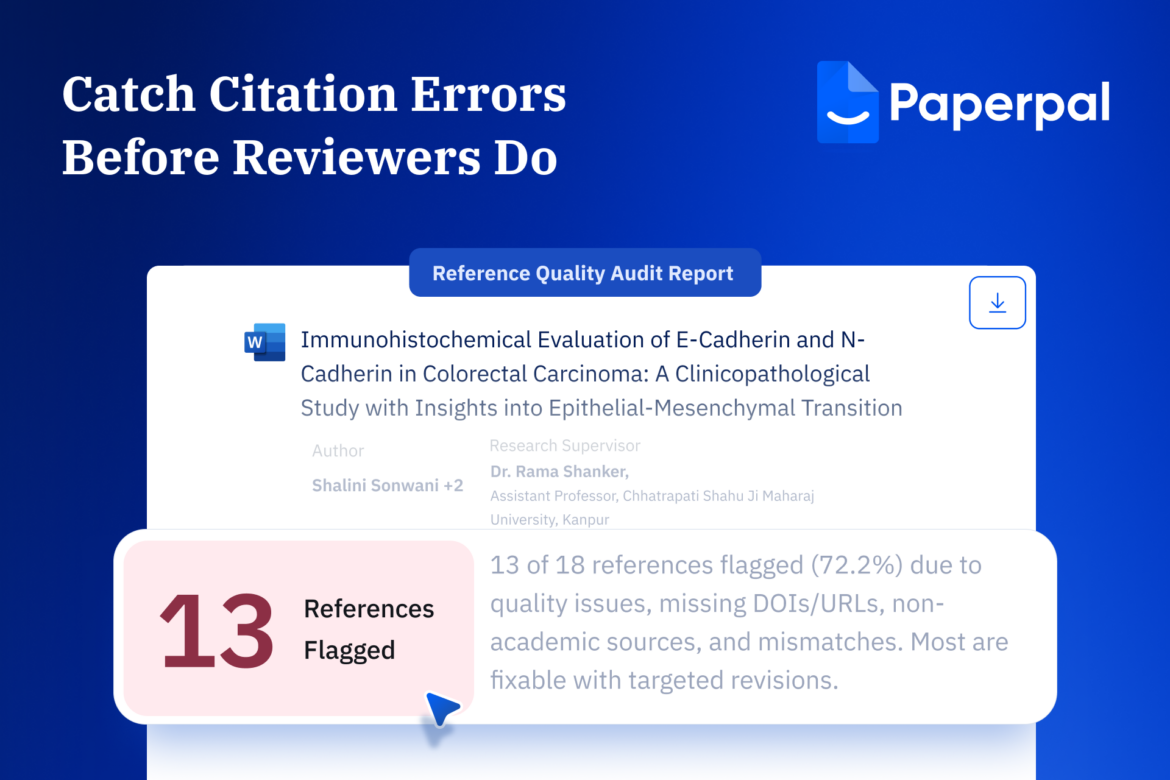
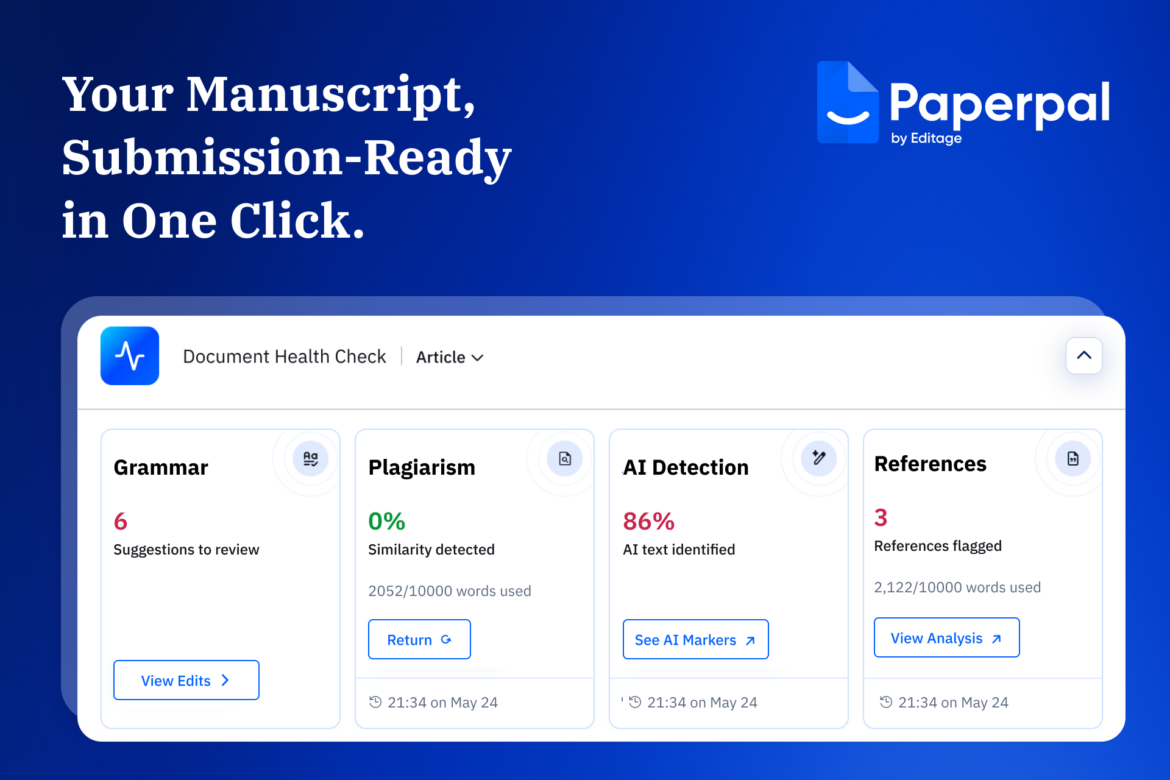
Preparing your manuscript for journal submission is possibly one of the most nerve-wracking steps in a researcher’s publishing journey. This is also the stage where most researchers make errors that can define the fate of their manuscript. To quote renowned German physicist Werner Heisenberg, “An expert is someone who knows some of the worst mistakes that …
Anyone who has worked on a literature review knows the moment when the browser fills with tabs. One paper explains a method clearly. Another reports conflicting results. A third contains the statistic you need, but buried somewhere deep in the discussion section. Before long, you’re switching between files, running PDF search, copying notes, and trying to remember …
An essential step in the academic workflow, a comprehensive literature review can take anywhere from a few months to over a year, depending on scope and topic familiarity. It’s not just another chapter, this often shapes the direction, credibility, and positioning of your entire research project. And that’s where the pressure usually begins. I’ve had this conversation with …
Academic writing has always rewarded clarity, structure, and precision. But now those same strengths have begun to work against students and researchers, making their writing seem suspicious to an AI detector. It’s not because your writing style changed, but because the increasing use of AI has transformed how academic writing is evaluated today. Many AI detection tools struggle to separate polished human writing from machine-generated patterns, …
You’ve finally finished drafting your article, with some help from AI, and run your writing through an AI content checker. The result makes you pause. And before long, you’re searching for the best AI humanizers or looking up tips on how to humanize AI content. But before rushing to use AI humanizers, take a minute to ask yourself: Will using AI humanizing tools to make AI-generated text more ‘human-like’ actually simplify the process or does it risk introducing new red flags in your academic writing? What is an …
Knowing how to write a research paper title is an art that not every researcher possesses, and researchers often spend a lot of time skimming through articles to find the right research paper title. According to an interesting estimate, researchers read more than 100 publications every year and spend long …
AI detectors and AI detection have become an unavoidable part of academic writing today. Universities and journals are experimenting with it, and students and researchers are increasingly encountering AI scores attached to their work. But as AI detection tools become more widespread, so do their limitations: false positives are common, original work is flagged, and language editing or polishing can be mistaken for misconduct. Amid evolving AI use guidelines, authors are often left navigating uncertainty, …
Part of one of Africa’s most research-intensive universities, the Faculty of Health Sciences at the University of Pretoria has collaborated with Paperpal to support its staff and students in balancing their research and academic obligations. This partnership aims to accelerate research processes and improve the likelihood of publication in reputable …
Have you ever stared at a blank page thinking, “Why is writing so hard when the ideas are right there in my head?” You’re not alone. Every academic, from a PhD student working on their thesis to a post-doctoral researcher juggling a conference presentation and multiple deadlines, knows the pain. …