
Artificial intelligence (AI) detectors, also referred to as AI writing detectors or AI content detectors, are software tools that help users identify text generated using AI, such as ChatGPT. Such AI detectors are useful in several fields, such as publishing and education, because they can help journal editors determine whether a …
"200"
The Modern Language Association (MLA) format is a widely used style for writing academic papers, particularly in the humanities.1 It ensures clarity, uniformity, and professionalism in scholarly writing. Following MLA guidelines helps maintain consistency in document structure, citations, and presentation. The key formatting rules to follow when preparing an MLA-style …
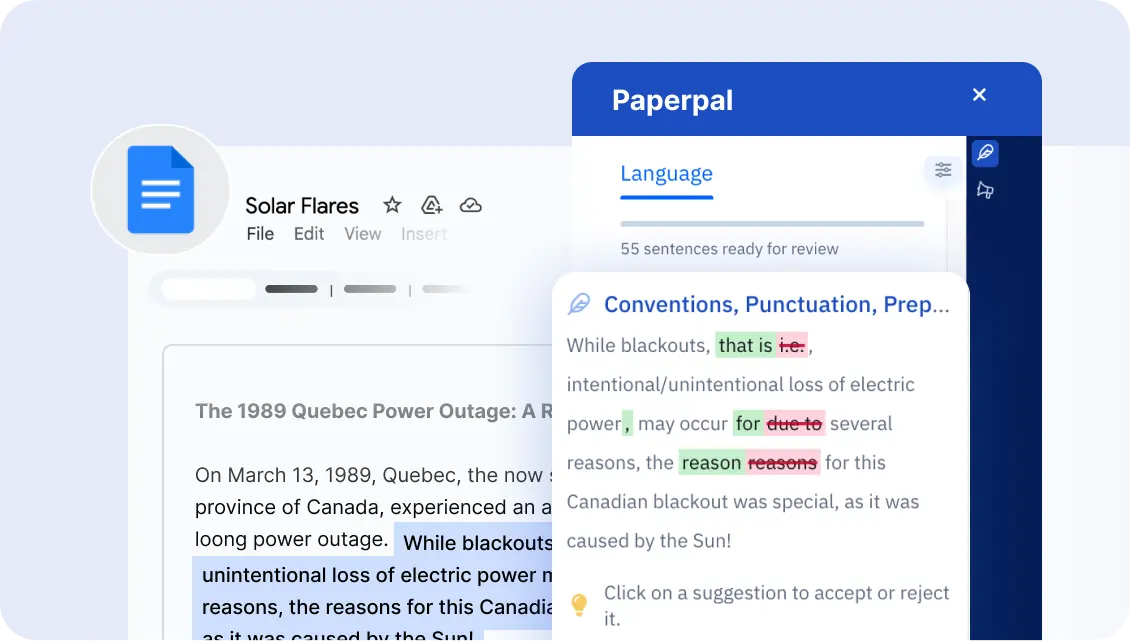
Academic writing requires precision, clarity, and strong grammar, but editing in Google Docs can be limiting when you need comprehensive writing support. That’s why we’re thrilled to announce a major upgrade to Paperpal for Google Docs, transforming it from a grammar checker into a complete AI writing assistant designed to help …
Clear and polished writing is non-negotiable in academia. Researchers need to juggle complex ideas, stringent formatting guidelines, and the pressure to publish—all while ensuring their work meets the highest standards of clarity and rigor. This is where AI writing tools for research like Paperpal, Grammarly, and QuillBot come in enhance …
A conceptual framework is essential in research as it provides a structured approach to defining relationships between variables and guiding the study’s methodology.1 The definition of a conceptual framework refers to a theoretical structure that connects key concepts and explains how they interact. This article will focus on what a …
As a researcher, mastering the art of academic paraphrasing can help you elevate your writing. Paraphrasing is more than just substituting words; it essentially involves understanding and rewriting text using different phrases and sentence structures while maintaining the original meaning. Effective academic paraphrasing adds variety to one’s written work, reduces …
Inadvertent plagiarism is a pressing issue in academia, often stemming from a lack of awareness or misunderstanding regarding proper citation practices. It can take many forms, such as failing to attribute ideas, paraphrasing too closely, or patchwork plagiarism, which involves blending content from multiple sources without proper acknowledgement. The scale …
Literature search and research reading can be overwhelming. The research discovery process often needs you to sift through millions of academic papers across multiple databases, juggling different search engines and tools just to find relevant studies. Reading, evaluating relevance, and managing references further add to the cognitive load, making research …
With the rise in collaborative research projects spanning across geographies, languages, and disciplines, there is a growing need for AI writing tools. Here, Writefull, designed to understand the intricacies of academic writing, emerges as a powerful ally for scholars. The Writefull AI writing assistant provides instant feedback and suggestions to …
In academia, when tasked with writing an analytical essay, scholars are expected to study a topic or subject in great detail, gain new insights, and present their arguments based on supporting evidence and critical analysis. Unlike other types of essays, an analytical essay typically focuses on the ‘how’ and ‘why’ …